Share
What Safety Features Does the Isuzu D-MAX Have? A Guide to IDAS and Vehicle Safety
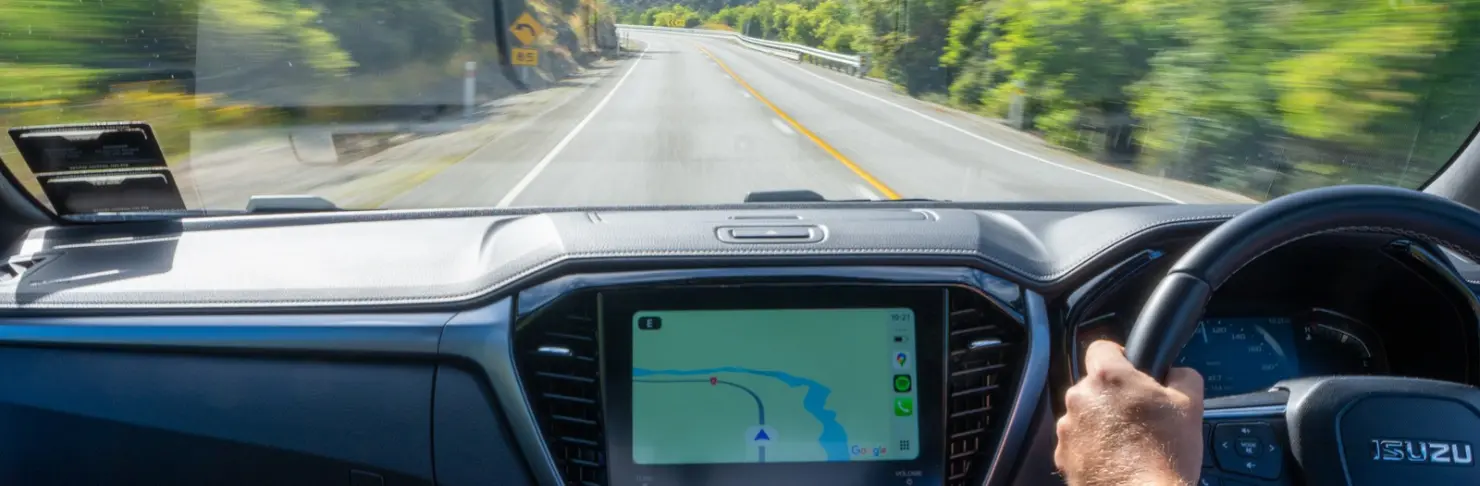
The Isuzu D-MAX comes equipped with Isuzu's Intelligent Driver Assistance System (IDAS), a comprehensive suite of active safety and driver assistance technologies designed to help identify potential hazards and support the driver. Standard across the D-MAX range, IDAS includes features such as Autonomous Emergency Braking, Blind Spot Monitoring, Lane Keep Assist and Rear Cross-Traffic Alert.
The D-MAX also features eight airbags, Electronic Stability Control and a reinforced cabin safety cell. It holds a 5-star ANCAP safety rating under the 2022 assessment criteria, providing an additional point of reference for drivers researching their next ute.
What is Isuzu's Intelligent Driver Assistance System (IDAS)?
IDAS stands for Intelligent Driver Assistance System. It is Isuzu's collection of active safety technologies designed to help drivers identify potential hazards and respond to changing road conditions.
The system uses a stereo camera and sensors to monitor the vehicle's surroundings. Depending on the feature, IDAS can provide visual or audible warnings, assist with steering or apply braking when certain risks are detected.
IDAS is standard across the Isuzu D-MAX range, giving drivers access to a comprehensive range of safety technology across the lineup.
What safety features does the Isuzu D-MAX have?
The D-MAX includes a range of active safety and driver assistance technologies, alongside passive safety features designed to help protect vehicle occupants.
Some of the key technologies include:
|
Safety feature |
What it does |
|
Autonomous Emergency Braking (AEB) |
Can automatically apply the brakes if a potential collision is detected and the driver does not respond. |
|
Turn Assist with AEB |
Provides braking assistance to help avoid certain collisions when turning across the path of oncoming traffic. |
|
Forward Collision Warning (FCW) |
Provides an alert when a potential collision ahead is detected. |
|
Blind Spot Monitoring (BSM) |
Helps identify vehicles approaching in adjacent blind spots. |
|
Rear Cross-Traffic Alert (RCTA) |
Provides warnings about approaching traffic when reversing. |
|
Lane Departure Warning (LDW) |
Alerts the driver when the vehicle begins to unintentionally leave its lane. |
|
Lane Keep Assist (LKA) |
Can provide steering assistance to help keep the vehicle within detected lane markings under the system's operating conditions. |
|
Emergency Lane Keeping (ELK) |
Can intervene with steering assistance when a potential collision risk is detected during an unintended lane departure. |
|
Adaptive Cruise Control (ACC) |
Adjusts the vehicle's speed to help maintain a set following distance from traffic ahead. |
|
Traffic Sign Recognition (TSR) |
Recognises certain road signs and displays relevant information to the driver. |
|
Driver Attention Assist (DAA) |
Provides assistance intended to help alert the driver to signs of reduced attention. |
|
Misacceleration Mitigation |
Helps reduce the risk of unintended acceleration in certain low-speed situations. |
|
Electronic Stability Control (ESC) |
Helps maintain vehicle stability when a loss of control is detected. |
|
Trailer Sway Control (TSC) |
Helps manage unwanted trailer movement by applying braking intervention. |
|
Hill Start Assist (HSA) |
Helps prevent the vehicle from rolling backwards when moving off on an incline. |
|
Hill Descent Control (HDC) |
Helps maintain a controlled speed when travelling down steep terrain. |
The D-MAX specification also lists Post-Collision Braking, Lane Departure Prevention and an Intelligent Speed Limiter.
Some systems have specific operating conditions, and features such as cruise control and lane assistance depend on vehicle configuration and how the system is being used. Driver assistance technology does not replace attentive driving.
What is Autonomous Emergency Braking in the Isuzu D-MAX?
Autonomous Emergency Braking (AEB) is a safety technology designed to help prevent or reduce the severity of certain collisions.
The D-MAX uses its stereo camera system to detect potential hazards, including other vehicles, pedestrians and cyclists. If the system identifies a potential collision, it can provide audible and visual warnings before automatically applying the brakes if the driver does not respond.
The D-MAX also features Turn Assist with AEB, which provides additional braking assistance at certain intersections when turning across the path of oncoming traffic.
AEB is designed to provide an additional layer of protection, not replace the driver's responsibility to observe the road and brake when required.
Does the Isuzu D-MAX have Blind Spot Monitoring?
Yes. Blind Spot Monitoring (BSM) is included in the D-MAX's active safety technology.
The system helps detect vehicles approaching in adjacent lanes that may not be easily visible in the driver's mirrors. It provides a warning to help the driver make more informed decisions when changing lanes.
This can be particularly useful when travelling on motorways or busy roads, where surrounding traffic can be difficult to monitor.
Does the Isuzu D-MAX have Lane Keep Assist?
Yes. The Isuzu D-MAX includes Lane Keep Assist, alongside Lane Departure Warning, Lane Departure Prevention and Emergency Lane Keeping.
These technologies are designed to help drivers identify and respond to unintended lane departures.
Lane Departure Warning alerts the driver when the vehicle begins to move out of its detected lane. Lane Keep Assist can provide steering assistance to help guide the vehicle within lane markings when its operating conditions are met.
On the D-MAX, Isuzu describes Lane Keep Assist as operating while Adaptive Cruise Control is engaged. Drivers should refer to their owner's manual for the specific operating conditions of each system.
How many airbags does the Isuzu D-MAX have?
Every Isuzu D-MAX includes eight airbags as standard equipment.
The eight airbags comprise:
- Dual front airbags.
- Front side airbags.
- Curtain airbags.
- Driver's knee airbag.
- Front centre (far-side) airbag.
The front centre airbag is designed to provide additional protection between front-seat occupants during certain side-impact collisions.
The airbags work alongside the D-MAX's reinforced cabin safety cell and vehicle structure to help protect occupants in the event of a collision.
Does the Isuzu D-MAX have a 5-star ANCAP safety rating?
Yes. The Isuzu D-MAX has a 5-star ANCAP safety rating under the 2022 assessment.
According to ANCAP, the rating applies to all D-MAX variants built from July 2022. The 2022 assessment incorporates additional testing of updated vehicles alongside the original 2020 testing.
The D-MAX achieved the following scores:
|
|
Score |
|
Adult Occupant Protection |
86% |
|
Child Occupant Protection |
89% |
|
Vulnerable Road User Protection |
69% |
|
Safety Assist |
84% |
These categories assess different aspects of vehicle safety, including occupant protection, protection for other road users and the effectiveness of safety assistance technologies.
ANCAP testing criteria change over time, so the assessment year is important when comparing safety ratings between different vehicles.
What other safety equipment comes with the Isuzu D-MAX?
Alongside IDAS and its eight airbags, the D-MAX includes a number of additional safety features.
Electronic Stability Control (ESC)
ESC helps maintain vehicle stability by detecting when the vehicle is losing control and applying braking intervention where required.
Trailer Sway Control (TSC)
Designed for drivers who tow, TSC helps manage unwanted trailer movement by applying braking intervention to individual vehicle wheels.
Hill Start Assist (HSA)
Hill Start Assist helps prevent the vehicle from rolling backwards when moving off on an incline by temporarily maintaining brake pressure.
Hill Descent Control (HDC)
Hill Descent Control helps maintain a controlled speed when travelling down steep terrain by managing braking.
Reversing Camera
The D-MAX includes a reversing camera to provide a view of the area behind the vehicle when reversing.
Is the Isuzu D-MAX a safe ute for work and everyday driving?
The D-MAX combines active driver assistance technology with passive occupant protection to support a variety of driving situations.
Its safety equipment is designed to assist with everyday commuting, open-road driving, carrying loads and towing. The reinforced cabin structure, eight airbags and IDAS technology provide multiple layers of safety equipment across the range.
As with any vehicle, drivers should remain alert, maintain safe following distances and understand the operating limitations of driver assistance systems.
Isuzu D-MAX Safety FAQs
What does IDAS stand for in Isuzu vehicles?


IDAS stands for Intelligent Driver Assistance System. It is Isuzu's suite of active safety and driver assistance technologies, designed to help identify potential hazards and support the driver.
Does every Isuzu D-MAX have IDAS?
Yes. Isuzu's Intelligent Driver Assistance System is standard across the D-MAX range in New Zealand.
Does the Isuzu D-MAX have automatic emergency braking?
Yes. Autonomous Emergency Braking (AEB) is included in the D-MAX's IDAS system. It can provide warnings and automatically apply the brakes when certain potential collisions are detected.
Does the Isuzu D-MAX have Blind Spot Monitoring?
Yes. Blind Spot Monitoring is included in the D-MAX's safety technology and helps identify vehicles approaching in adjacent blind spots.
How many airbags does the Isuzu D-MAX have?
Every D-MAX has eight airbags as standard, including dual front, side, curtain, driver's knee and front centre airbags.
Does the Isuzu D-MAX have adaptive cruise control?
Yes. Adaptive Cruise Control is included in the D-MAX safety technology. Its availability and operation depend on the vehicle's specification and transmission. Refer to the relevant model specifications for details.
Does the Isuzu D-MAX have a 5-star ANCAP rating?
Yes. The D-MAX has a 5-star ANCAP safety rating under the 2022 assessment. It applies to vehicles built from July 2022 onwards.
Does the Isuzu D-MAX have ISOFIX?
Yes. The D-MAX specification includes ISOFIX-compatible child-seat anchor points and child-seat tether points. Check the owner's manual for the approved seating positions and installation instructions.
With eight airbags, a comprehensive suite of IDAS technologies and a 5-star ANCAP safety rating under the 2022 assessment, the Isuzu D-MAX is equipped with a range of safety features to support drivers and passengers.
Explore the Isuzu D-MAX range or visit your local Isuzu dealer to find out more.